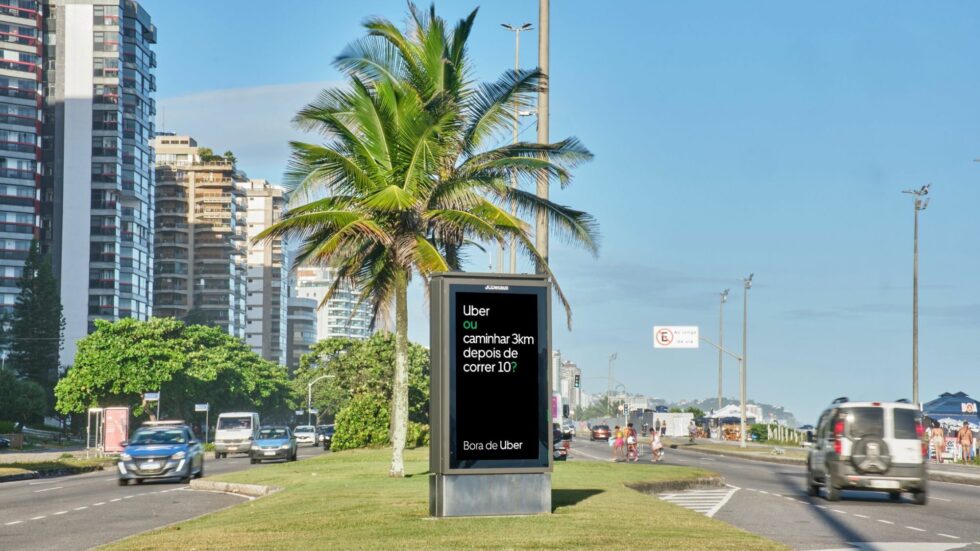
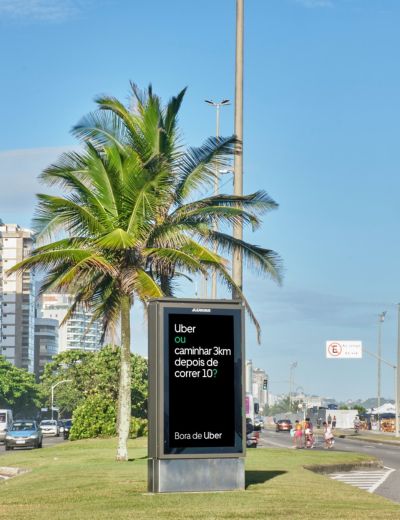

In the high-energy urban hubs of Brazil, simply being seen isn’t enough; being relevant is the real currency. To bolster brand awareness during the 2026 “Golden Quarter,” Uber launched a sophisticated programmatic Digital Out-of-Home (pDOOH) campaign that moved beyond static imagery. By leveraging Dynamic Creative Optimisation (DCO) and creative automation, Uber transformed hundreds of digital screens into real-time solutions for the modern commuter, with 70 unique creatives that adapted dynamically to live weather conditions, local temperatures, and specific geographic locations.
Led by media agency Acessooh and deployed via the Displayce media platform, the campaign was activated via the VIOOH SSP across premium JCDecaux inventory. The result proved that data-driven triggers can turn a generic advertisement into a timely, helpful intervention that resonates with the immediate needs of the audience.
The strategy: intelligence via creative automation
The heartbeat of this campaign was the use of creative automation based on live data. Rather than running a single, unchanging creative, Uber has produced 70 specific messages that are triggered based on live local conditions. This ensured that the brand was not just part of the landscape, but an active participant in the commuter’s journey.
- Weather-driven DCO: When real-time weather data indicated rain, the creative shifted instantly to position Uber as the dry, comfortable alternative to walking or navigating public transport in a downpour.
- Temperature-driven DCO: The campaign monitored local temperature fluctuations in real-time. When temperatures climbed, particularly above 28°C, the messaging automatically updated to highlight the relief of an air-conditioned ride.
- Temporal Relevance: A dedicated night version of the campaign was activated between midnight and 4 am, ensuring messaging aligned with late-night mobility requirements.
Hyper-local contextualisation at street level
Beyond environmental data, Uber utilised geographic contextualisation to create a sense of proximity. By tailoring messages to the specific challenges of the local terrain, the brand achieved a high level of engagement in the physical world.
In São Paulo, screens near steep inclines featured the cheeky prompt: “Uber ou subir a Brigadeiro a pé?” (Uber or walk up the Brigadeiro?). These location-specific creatives were strategically placed along high-traffic corridors like Avenida Brasil, Avenida Brigadeiro Luís Antônio, and Faria Lima to capture commuters exactly when their fatigue was highest. By referencing well-known streets, parks, and neighbourhoods, Uber successfully embedded itself into the daily fabric of life in São Paulo, Rio de Janeiro, and Brasília.
The results: massive scale, tailored impact
The use of programmatic DOOH allowed Uber to achieve unrivaled visibility during the busiest quarter of the year while maintaining the precision of a local campaign. The data-driven approach delivered significant impact across Brazil’s major metropolitan areas:
- 33.7 million impressions: Generating massive nationwide reach through high-intent audiences.
- 7.7 million DOOH plays: Ensuring a constant, dynamic presence throughout the holiday surge.
- 734 premium screens: Dominating the urban landscape via a wide-reaching network of transit hubs and urban panels.
Conclusion: redefining the mobility partnership
Uber’s campaign serves as a powerful proof of concept for the future of programmatic DOOH. By synchronising media buying with peak travel windows and real-time environmental triggers, the brand moved away from traditional “broadcasting” and towards contextual utility.
The success of this activation demonstrates that when DCO and creative automation are applied to the physical world, the results go beyond mere impressions. Uber did not just remind people they existed; they proved they understood the specific discomfort of a hot afternoon or a sudden rainstorm. By providing a timely solution to these daily urban frictions, Uber effectively reinforced its position as the default mobility partner for millions of commuters, proving that in the world of modern advertising, the right message at the right moment is the ultimate competitive advantage.