
All figures come from Displayce media platform data. They cover campaigns activated between 1 January and 18 October 2026, compared with the same period in 2025.
Since the start of 2026, 792 programmatic DOOH campaigns have run in France through the Displayce media platform. That is 27% more than last year, for 967 million impressions (+78%). The average budget per campaign has risen by 31%.
French advertisers are no longer testing pDOOH: they are running bigger campaigns, on more screens, in more cities. Here are five lessons from the data.
1. Paris sets the pace, the regions drive growth
The number of campaigns running outside the Île-de-France region grew by 29%, and their impressions almost doubled (+97%).
Paris, Lyon, Marseille, Nice and Lille make up the top 5 cities by impressions. Lyon, Marseille, Nice and Lille all more than doubled their impressions compared with 2025. Brands now plan national campaigns that reach audiences in city centres, stations and shopping centres across the regions, not just in the capital.
2. Data-driven targeting becomes the norm
Campaigns using audience data grew by 80% in 2026. Those using points of interest (POI) data grew 6.5-fold. Advertisers choose their screens based on the people who pass in front of them and the places nearby.
The journey continues after the screen. Campaigns extended to mobile through retargeting grew sixfold: brands can reach the same people again on their phones.
3. Creatives that respond to the world around them
French advertisers no longer settle for a single message. 30% of campaigns rotate 10 or more creatives, and 95% use video.
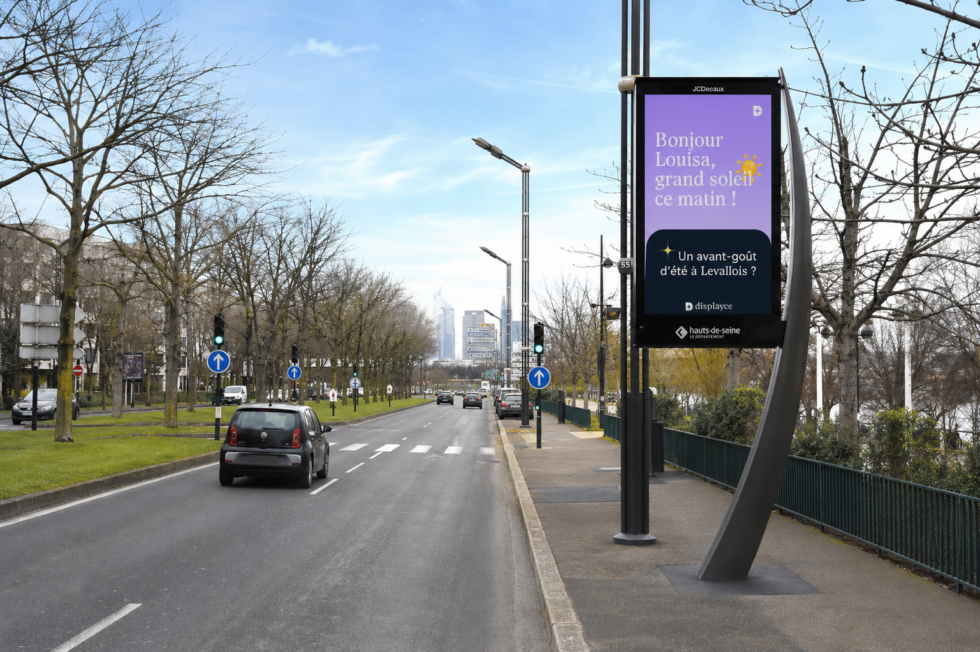
Contextual triggers decide when messages appear. Weather is the most used trigger: campaigns start and change with the temperature, rain or sunshine, so the message matches what passers-by feel as they step outside. The airport trigger comes second: a creative is activated according to the real arrival and departure times of international and regional flights.
Our latest event-based trigger applies the same logic to concerts, conferences, sports and family events: campaigns run on screens around the venue, before and after the event, as the audience arrives or heads home. Discover how Keytrade Bank turned DOOH into creative reactions to events.
4. Campaigns follow audiences throughout their day
Street furniture leads the environments with 30% of investment, ahead of station screens (26.9%), shopping centres (17%), the metro (9.2%) and airports (6.5%). On the street, on public transport or while shopping, pDOOH follows audiences through their daily journeys.
Banking and insurance is the leading advertiser sector, ahead of FMCG and food, transport and travel, health and beauty, and retail.
5. A self-sufficient market, buying in France and abroad
93% of campaigns are run in self-service. Agencies plan, activate and optimise their pDOOH campaigns themselves. Media owners do the same: three times as many campaigns are now operated directly by media owners on the Displayce platform.
Buying choices reflect this maturity. 69% of campaigns use Always On Deals exclusively, 14% use Private Non-Guaranteed Deals exclusively, and 16% combine several deal types.
French agencies are also looking beyond their borders. The number of advertisers they activate outside France grew by 61%, across 29 countries, led by the United Kingdom, Germany and Switzerland. A Paris-based team can run screens in London, Berlin or São Paulo from the same platform, with the same workflow.
Finally, pDOOH is increasingly measured. Campaigns with a Brand Lift study grew by 77%: one campaign in seven now measures its impact on the brand.
Key takeaways
France has moved past the experimentation stage. pDOOH now runs across the whole country, relies on data to choose its screens, and lets the weather or a flight decide when its message appears.
Want to see what a contextual, data-driven DOOH strategy could look like for your brand? Contact the Displayce team.

