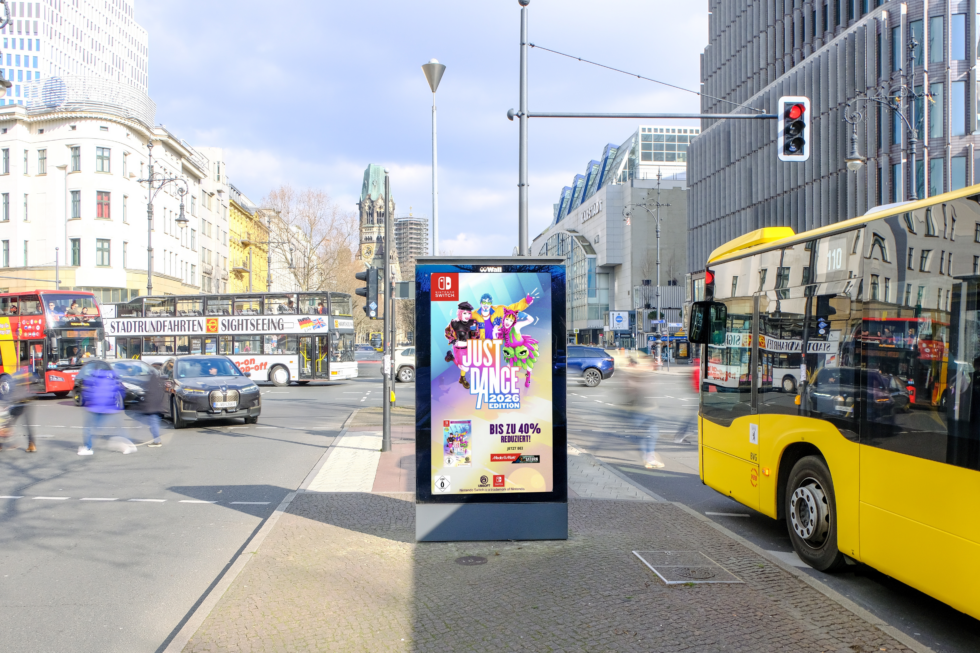
All figures come from Displayce’s own media platform data. They cover campaigns activated between January 1 and July 29, 2026, compared with the same period in 2025.
DACH pDOOH campaigns are up 136% in 2026. Displayce data shows where budgets go, how buyers plan, and why context now drives growth.
In the first seven months of 2026, 461 programmatic DOOH campaigns were activated across Germany, Austria and Switzerland on the Displayce media platform. That’s up 136% year-on-year, generating 1.01 billion impressions (+139%).
Behind the growth, the data shows a market that is changing how it buys, where it invests and when it chooses to show up. Here are five things it tells us.
1. Germany is driving the growth, and buyers are handling DOOH by themselves
Germany accounts for 80.2% of all DACH activations, and activations there are up 223.5% on 2025. Switzerland (11.2%) and Austria (8.6%) are smaller markets but they are established.
How campaigns are bought matters as much as how many there are. 98.9% of campaigns now run in self-service mode, up 5.6 points from 93.3% in 2025. At that level, self-service is no longer a trend. It’s the default. It shows a high level of maturity and a real understanding of the medium. Agencies plan, activate and optimise pDOOH themselves, and that only happens once teams fully trust the channel.
Buying also stays at home. 80% of campaigns are run by German, Austrian or Swiss agencies on inventory in their own region.
2. Buyers know which deal to use, and when
Always On Deals are the most widely used, by 34.5% of campaigns. Private Non-Guaranteed Deals (26.1%) are used for more flexible campaigns that rely on levers like triggers or dayparting. Programmatic Guaranteed (20.1%) is used more tactically, especially for high-impact activations where guaranteed impression volumes matter. The remaining campaigns combine several deal types within a single activation.
The result is a market that balances flexibility and security, and chooses the buying model to fit the objective rather than the other way around.
3. Budgets follow people through their day
Spend is concentrated in the region’s largest cities. Berlin leads with €2.34M, ahead of Hamburg (€1.66M) and Munich (€1.27M). Within these cities, budgets go to the places people pass through every day: urban panels (29.9%), bus shelters (21.1%), train stations (12%), the underground (10.1%) and shopping centres (5.4%). The commute, the city centre and the wait for transport are where DOOH reaches people.
These everyday moments are a natural fit for the sectors that invest most. Finance leads at 25.3%, followed by FMCG (23.6%), Luxury (12.3%), Retail & e-commerce (11%) and Automotive (7.4%). Banking, consumer goods and retail brands all need to show up repeatedly in the same daily routines, and DOOH puts them right there.
Data makes this presence more precise. Advertisers can build audiences from retail, point-of-interest and behavioural insights, so they reach people based on where they go and what they do, rather than buying DOOH space in isolation. This data comes from curated third-party sources across channels, optimised for the specific requirements of DOOH.
4. Big moments now shape the media calendar
June 2026 was the strongest month of the period, with spend increasing by 312% compared with June 2025 .It coincided with the kickoff of the FIFA World Cup. Advertisers didn’t just keep their usual plans running. They moved budgets towards the moment when audiences were out, together, and paying attention.
DOOH can respond to the real world as it happens, and buyers are using that more and more.
5. Targeting tells you who and where. Context tells you when.
Targeting has become much sharper. 18% of campaigns now use Point Of Interest (for example, screens near Starbucks or Nike stores) targeting, compared with 0.5% in 2025.
But knowing who and where someone is only gets a campaign so far. An ad gets attention when it matches the moment someone is in. The figure that shows this best: spend on contextually triggered campaigns is up 1,290% versus 2025, across airport, weather and custom triggers.
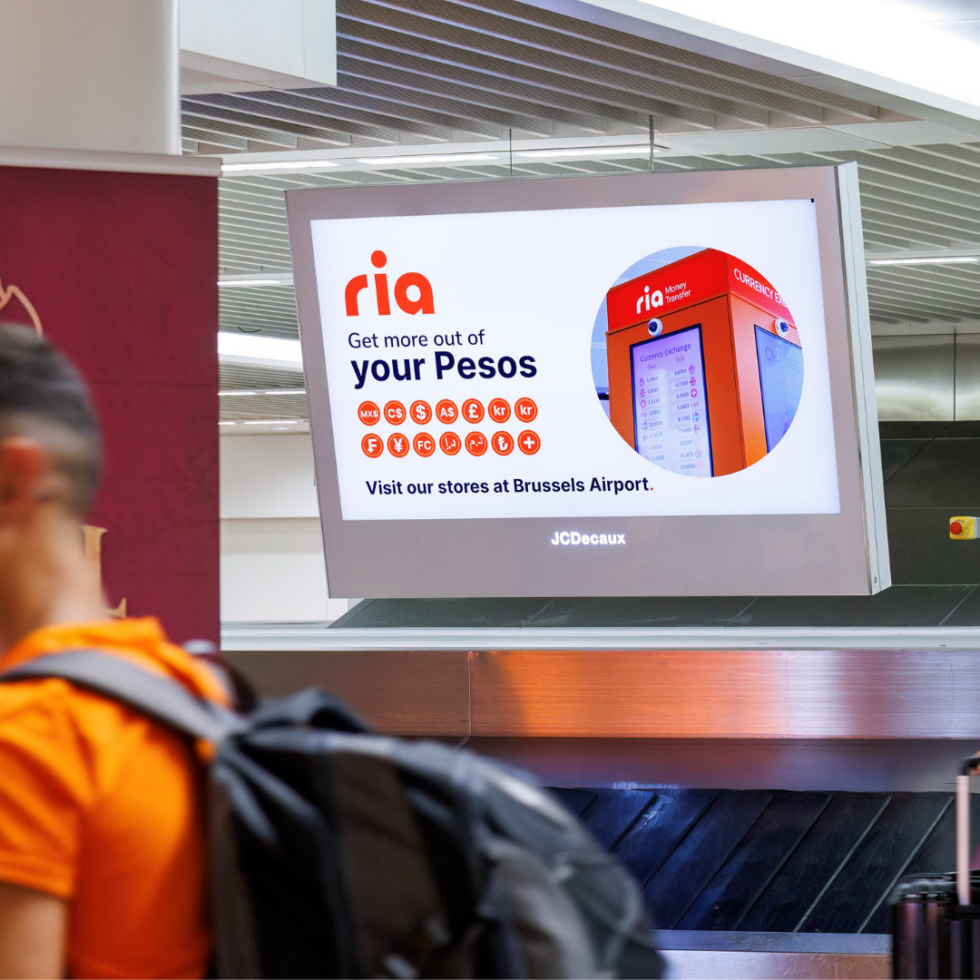
In practice, this takes several forms. Airport Live Triggering ties campaign delivery to real flight schedules, so the right message runs around actual arrival and departure times, following passengers’s itinary. Discover how Ria Money Transfer used live flight data to trigger creatives.
Our new Event Trigger starts from a simple idea: the type of event people go to says a lot about who they are. Advertisers pick from six event categories (concerts, conferences, sports, family events…), depending on the audience they want to reach. Campaigns then run on screens around the venue, before and after the event, when attendees are on their way in or heading home. June’s World Cup peak shows how much these moments matter.
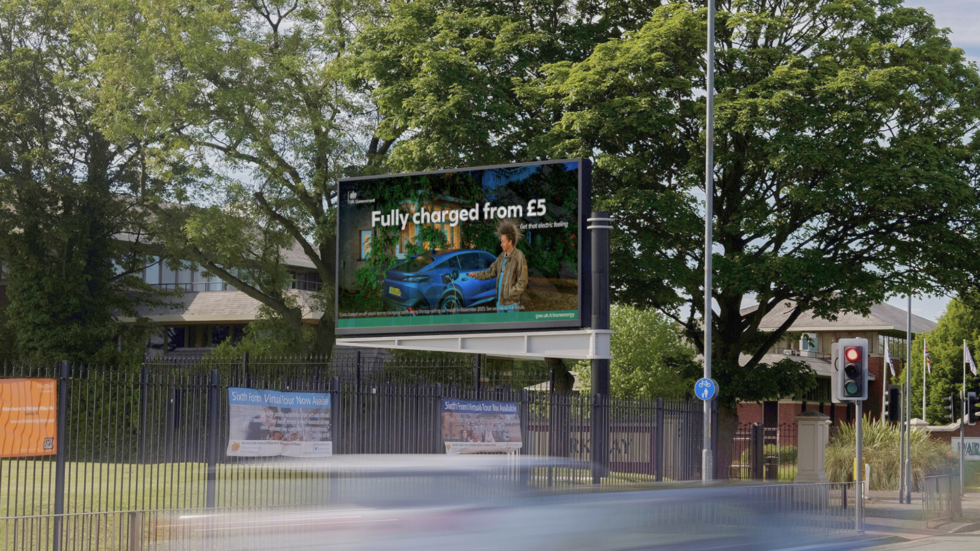
Advertisers who want to build their own logic can set up custom triggers on first-party or real-time data. For the UK Government, we developed a custom carbon trigger: campaign delivery was driven only when carbon levels were low. Discover the campaign here.
The takeaway
The DACH market is no longer asking whether pDOOH works. It’s asking how precisely it can work. For advertisers planning their next campaign, the data points to three questions:
- Does your buying model match what you want to achieve?
- Are you buying screens, or your audience’s daily journey?
- Can your campaign react to what’s happening in the real world: a match, a flight, the weather?
Curious what a curated, contextual DOOH strategy could look like for your brand? Get in touch with the Displayce team.