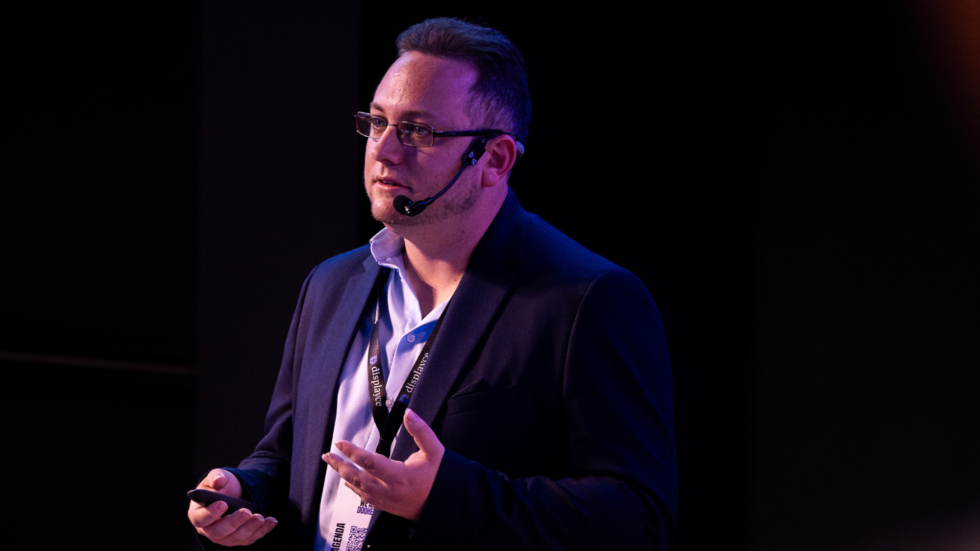
As part of our #WeAreDOOHers series, we spoke with Kevin Biard, Head of the Programmatic Team at Kinesso Belgium. With over two years leading the team responsible for all programmatic media buying for the agency’s diverse client base, Kevin shares his insights on how Programmatic Digital Out-of-Home is reshaping the media mix, the challenges of bridging traditional and digital worlds, and the future of omnichannel synergy.
Adding a layer of impact in a saturated world
As it becomes harder to capture attention in a crowded digital space, finding channels that truly stand out is critical. For Kevin Biard, the primary appeal of pDOOH lies in its ability to restore impact to campaigns while using modern technological capabilities.
He notes that clients consistently demand greater presence and effectiveness. By integrating DOOH into the programmatic mix, agencies can offer a channel that provides tangible branding value, backed by studies confirming its significant role in campaigns.
Furthermore, the programmatic capability injects a “layer of flexibility” into the traditional Out-of-Home channel. This allows for advanced audience targeting and responsiveness, bringing the full power of programmatic technology to a historically static media
Bridging two worlds: Challenges and opportunities
When integrating DOOH into programmatic strategies, the hurdle is often cultural rather than purely technical. Kevin describes the challenge of merging two distinct sectors: the traditional OOH world, with its specific language and partners, and the programmatic sphere.
At Kinesso Belgium, the strategy has been to have programmatic specialists handle the digital inventory buying. This requires a concerted effort to align objectives and working methods with traditional OOH experts to ensure a unified vision.
However, these challenges are outweighed by the opportunities. The real potential lies in applying the sophistication of programmatic (such as audience targeting, rapid activation or pausing of campaigns, and drive-to-store strategies) to the OOH medium. This flexibility allows agencies to respond to a wider variety of client briefs and deepen their strategic planning.
The future: Synergy over replacement
Looking ahead, Kevin Biard addresses a common misconception that programmatic DOOH is destined to replace traditional OOH. Instead, he views the relationship as fundamentally complementary. While classic OOH excels at mass reach, programmatic serves as a precise “overlay” that targets specific audiences at key moments, often with smaller budgets.
The next step for the industry is to break down silos. Kevin sees a massive opportunity in creating better synergy between DOOH and the rest of the digital mix, such as display and video. By coordinating presence across these channels, whether through retargeting or complementary timing, advertisers can unlock the full potential of an omnichannel approach.